Toxic Advantage: Did Lead Exposure Help Humans Outcompete Neanderthals?

As someone fascinated by human evolution, I’ve always been captivated by the biggest mystery of all: why are we the last humans standing? For tens of thousands of years, we shared the planet with our close cousins, the Neanderthals. Then, they vanished. A groundbreaking new study, recently highlighted by ScienceAlert, proposes a shocking new piece of the puzzle: lead exposure. This new theory suggests our ancestors, *Homo sapiens*, may have had a unique tolerance for this natural toxin, giving us an unexpected human evolutionary advantage.
TL;DR
A controversial new study proposes that early *Homo sapiens* had a higher tolerance for environmental lead than Neanderthals. This “toxic advantage” might have offered unexpected cognitive or developmental benefits that helped our ancestors thrive. This post breaks down the science behind this Neanderthal extinction theory, the sources of ancient lead, and what it means for our own evolutionary success.
The “Poison Paradox”: A New Study Rewrites History
The story of human origins is constantly being updated, but this new hypothesis feels like a plot twist from a science fiction novel. The central idea is that constant, low-level exposure to naturally occurring lead in the environment didn’t just harm our ancestors—it might have inadvertently helped them.
What the Scientists Discovered
Researchers are now proposing that *Homo sapiens* evolved a biological tolerance to lead that Neanderthals lacked. This isn’t about immunity to acute lead poisoning, but rather a subtle adaptation to its presence. The study speculates that this tolerance could have had downstream effects on our development, potentially influencing our cognitive function or immune systems in a way that gave us a competitive edge.
“The hypothesis is that different tolerances to the environment, possibly including toxins, could have been a factor in the competition between humans and Neanderthals.”
Why This Challenges Previous Theories of Neanderthal Extinction
For decades, the conversation around the Neanderthal extinction theory has been dominated by a few key ideas:
- Climate Change: Rapidly shifting climates made their traditional hunting grounds and survival strategies obsolete.
- Direct Competition: Larger, more socially complex groups of *Homo sapiens* simply out-competed them for food and territory.
- Assimilation: Neanderthals didn’t die out so much as they were absorbed into the much larger human population through interbreeding.
This new “lead tolerance” idea doesn’t necessarily replace these theories of Neanderthal extinction, but it adds a fascinating new layer of biological destiny to the mix. It suggests the battle for survival wasn’t just fought with spears and wits, but also at the invisible, cellular level.
How Were Ancient Humans and Neanderthals Exposed to Lead?
When we think of lead poisoning, we picture Roman pipes or peeling paint. But lead is a natural element (Pb) found in the Earth’s crust. During the Paleolithic era, there were no industrial sources, but exposure was still possible through several natural pathways.

Natural Lead in Water and Soil
Lead can leach from rocks into groundwater and accumulate in the soil. Any hominin drinking from a contaminated stream or living in a lead-rich area would have had chronic, low-level exposure.
Geophagy: The Practice of Eating Earth
Geophagy, or the intentional eating of soil, clay, or ash, is a practice observed in many traditional societies and even some animals. It’s often done to absorb toxins or supplement mineral intake. If a group lived in a lead-rich region, this practice would have been a direct route for ingestion.
Contaminated Food Sources
Plants can absorb lead from the soil. Animals eat those plants, and the lead accumulates in their tissues. For apex predators like Neanderthals and *Homo sapiens*, eating these animals could have led to the bioaccumulation of toxins up the food chain.
How Could a Toxin Provide an Evolutionary Advantage?
The idea that a poison could be beneficial seems completely backward. But biology is rarely that simple. The potential benefit hinges on a fascinating and counterintuitive concept known as hormesis.
What is Hormesis?
Hormesis is a biological phenomenon where a beneficial effect (like improved health, stress tolerance, or longevity) results from exposure to low doses of an agent that is otherwise toxic or lethal when given at high doses.
The Hormesis Theory: Small Doses, Big Impact?
Think of it as a biological fire drill. A small, non-lethal dose of a stressor (like a toxin) can trigger the body’s defense and repair systems. This can leave the organism stronger and more resilient than it was before. On an evolutionary timescale, a population constantly exposed to low lead levels might select for genes that not only tolerate the lead but also confer other, unexpected benefits.

A Potential Cognitive or Immune System Boost
The study speculates that the adaptive response to lead might have tinkered with our neurodevelopment. While high doses of lead are devastating to brain function, could a hormetic response have subtly altered our cognitive evolution, perhaps leading to greater creativity or different problem-solving skills? It’s a wild idea, but it opens up new avenues for thinking about how our unique minds came to be.
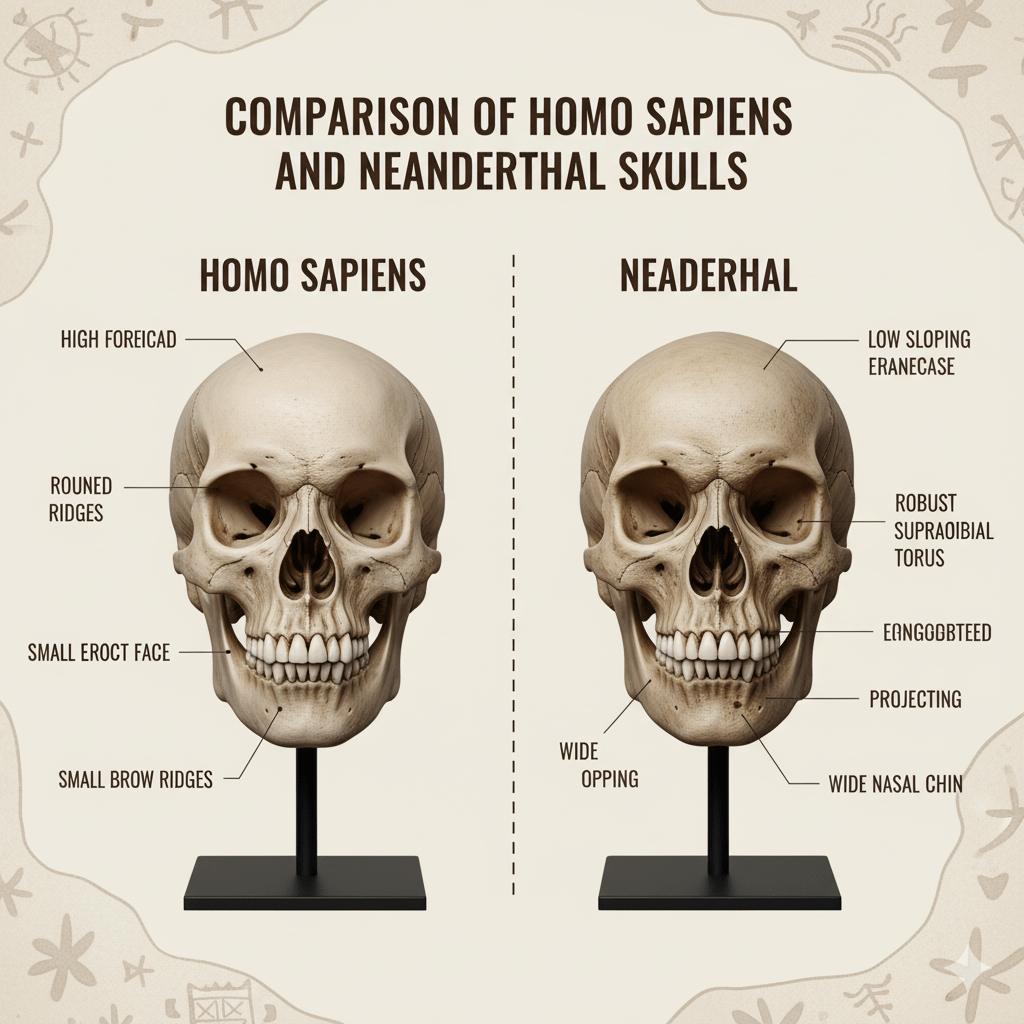
Neanderthals vs. *Homo Sapiens*: A Story of Different Tolerances
The entire theory rests on the idea that *Homo sapiens* and Neanderthals responded differently to lead. Why would that be? The answer may lie in our separate evolutionary journeys.

What the Genetic Evidence Might Suggest
Our species, *Homo sapiens*, evolved in Africa, while Neanderthals evolved in Europe and Asia. They were exposed to different environments, different foods, and different pathogens for hundreds of thousands of years. It’s plausible that these different environments led to the evolution of different sets of genetic tools for detoxification and stress response.
Did Neanderthals’ biology make them more vulnerable?
According to the Smithsonian Institution’s page on *Homo neanderthalensis*, their bodies were adapted for cold climates. Their biology, while perfectly suited for Ice Age Europe, may have lacked the specific adaptations our African ancestors developed. If *Homo sapiens* arrived in Europe with a pre-existing tolerance to a toxin that was prevalent there, it could have been a significant, unseen advantage in the long-term competition for survival.
What This Means for the Story of Human Evolution
So, should we add “lead tolerance” to the list of reasons humans “won”? I think we need to be cautious. This is an exciting but very new idea.
Acknowledging the Limitations and Need for More Research
Right now, this is a hypothesis without direct proof. To validate it, scientists would need to find genetic markers for lead tolerance that are present in ancient human DNA but absent in Neanderthals. They would also need more archaeological data on the environmental lead levels in the areas where these two species overlapped.
Reframing “Survival of the Fittest” as “Survival of the Most Adaptable”
What I find most compelling about this theory is how it reframes our understanding of evolution. It moves beyond a simple narrative of “strong vs. weak” or “smart vs. dumb.” It suggests that survival can depend on a complex and sometimes bizarre interplay of genetics, environment, and pure chance. Our success might not be due to one single “secret weapon,” but to a whole toolkit of adaptations—including, perhaps, a paradoxical tolerance for poison.
Frequently Asked Questions (FAQ)
What was the main finding of the new study on lead exposure?
The main finding is a hypothesis that early Homo sapiens may have developed a higher tolerance to environmental lead compared to Neanderthals. This tolerance could have unintentionally provided a cognitive or developmental advantage, contributing to our species’ success.
Is there direct evidence that Neanderthals were poisoned by lead?
No, not directly. The study is theoretical and based on proposing a new evolutionary model. There is no direct archaeological evidence, like mass Neanderthal graves showing signs of lead poisoning. The theory is based on potential genetic differences and environmental exposure models.
How can a poison like lead be good for you?
It’s not ‘good’ in the modern sense. The theory relies on a concept called hormesis, where a very low, chronic dose of a toxin can sometimes trigger a beneficial, adaptive response in an organism, such as a stronger immune system or altered developmental pathways. It’s a ‘what doesn’t kill you makes you stronger’ effect on an evolutionary scale.
What other factors are believed to have caused Neanderthal extinction?
Scientists believe Neanderthal extinction was likely caused by a combination of factors. The most common theories include rapid climate change, direct competition for resources with the more numerous Homo sapiens, assimilation (interbreeding with humans), and the introduction of new diseases carried by humans out of Africa.
Where did the lead in the ancient environment come from?
Lead is a naturally occurring element. In the Paleolithic era, exposure would have come from natural sources, not industrial ones. This includes lead leaching into groundwater, accumulating in soil (which might have been ingested through geophagy), and being absorbed by plants and animals in the food chain.
Is this theory widely accepted by scientists?
No, not yet. It is a very new and speculative hypothesis. It challenges existing models and requires much more evidence, particularly from genetics and archaeology, before it can be considered a mainstream scientific theory. It’s currently a fascinating ‘what if’ scenario.
Hi
I came across your Wix website and noticed you’ve done a lot of the hard work already — the layout, content, and visuals are all in place.
But there are a few invisible gaps that quietly affect how smoothly your site performs and how visitors experience it.
I specialize in fixing those core performance issues that Wix’s default setup usually misses — without touching your design or content.
Would you like me to share the exact parts that are holding it back?
David | Wix Optimization Expert
Helping Wix sites run faster, look sharper, and perform better.
turkmenistan hoteles booking First time using TravelShop and I’m completely impressed. Booking took less than 5 minutes, payment secure, and I received vouchers instantly. The hotel in Bodrum was even better than the photos – infinity pool, amazing spa, friendly staff. Will never book anywhere else! https://biolink.info/travelshop
Great casino, huh? Decent selection, but nothing I’d write home about. Check them out if you’re curious: phgreatcasinolink